
- EN
- DE

Virus
Parvovirus B19

- Organ System
- Blood & Bone Marrow
- Diagnostic Method
- Cytology, Histology
- Geographical Region
- Dry Areas,
- Islands,
- Tropical and Subtropical Region,
- Polar and Subpolar Zone,
- Temperate Zone
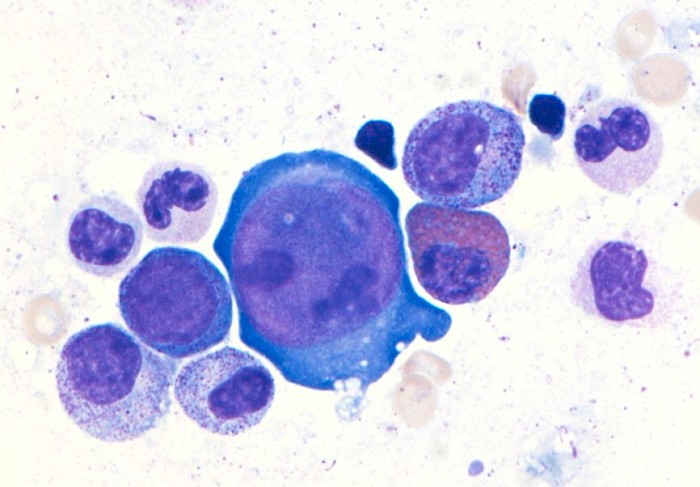
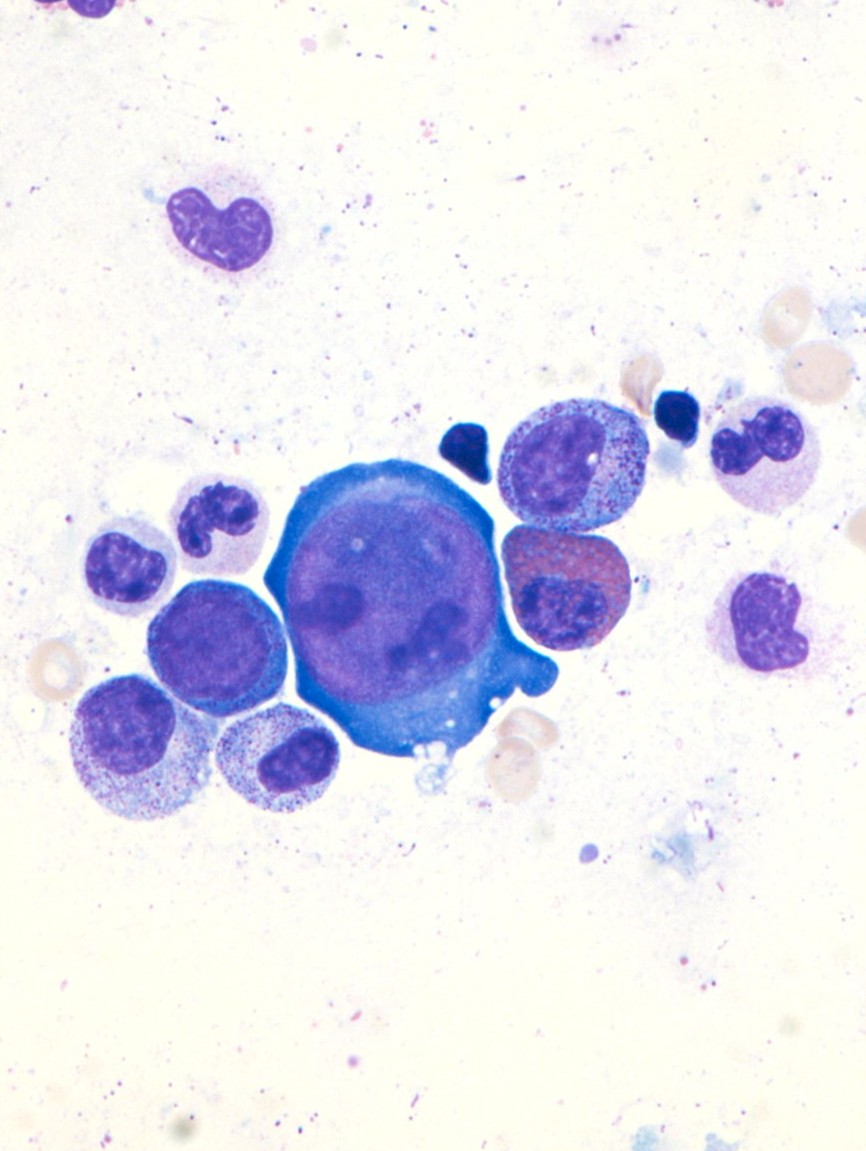 Bone marrow smear, giant proerythroblast…
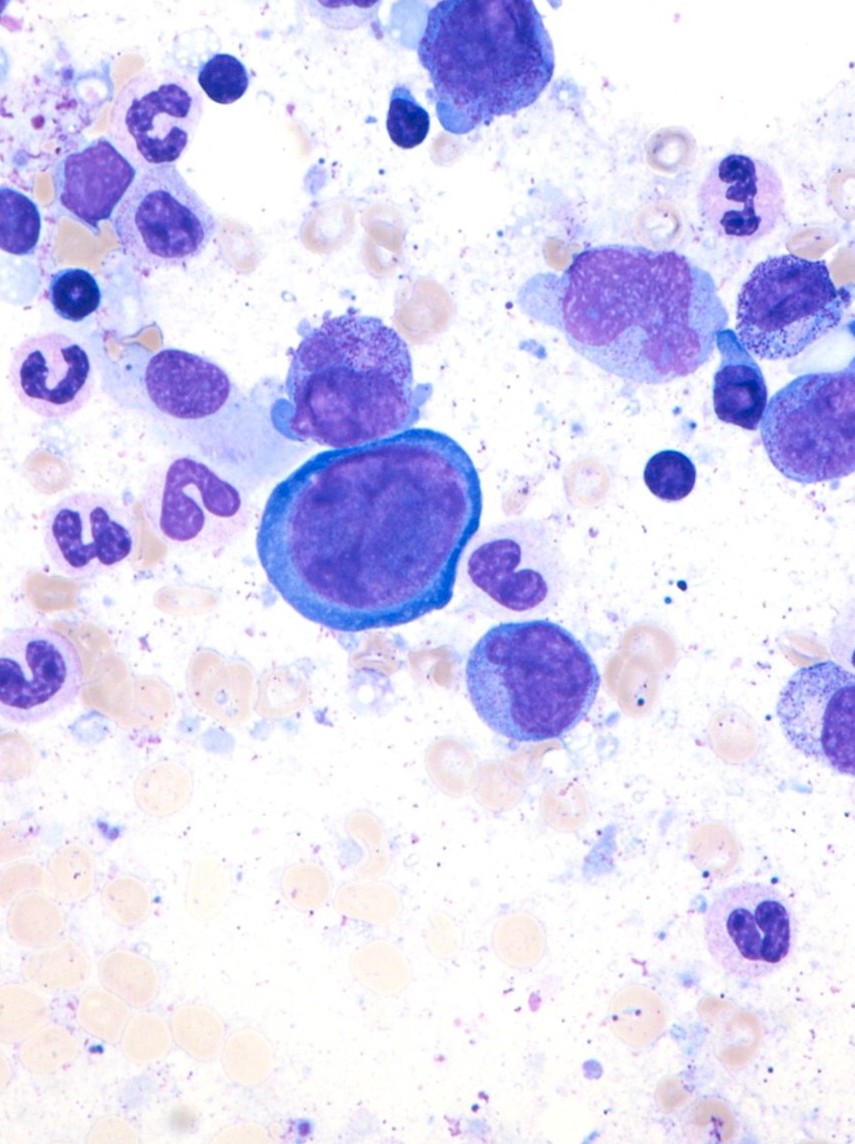 Bone marrow smear, giant proerythroblast…
 Bone marrow trephine biopsy, enlarged…
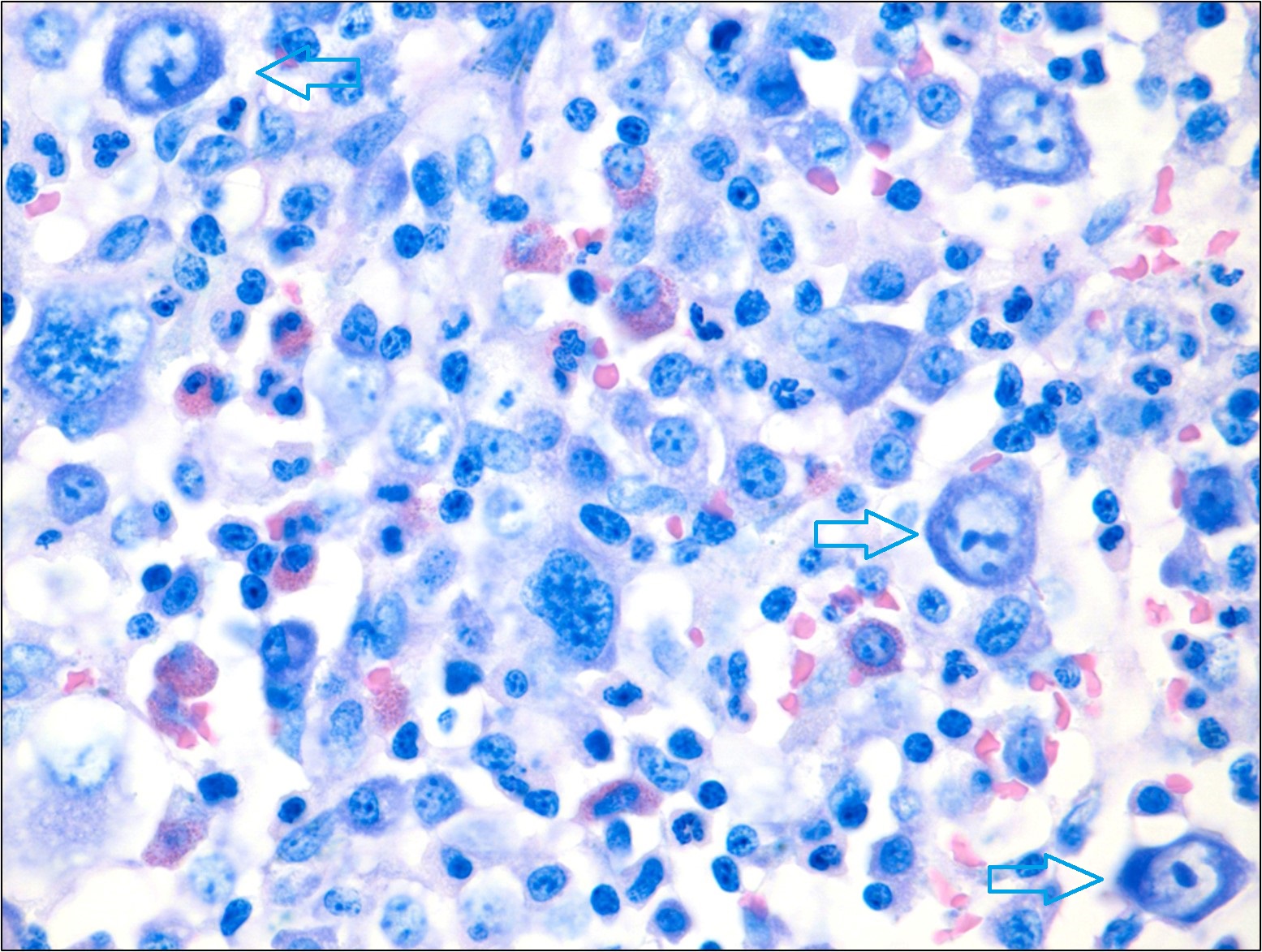 Bone marrow trephine biopsy, enlarged…
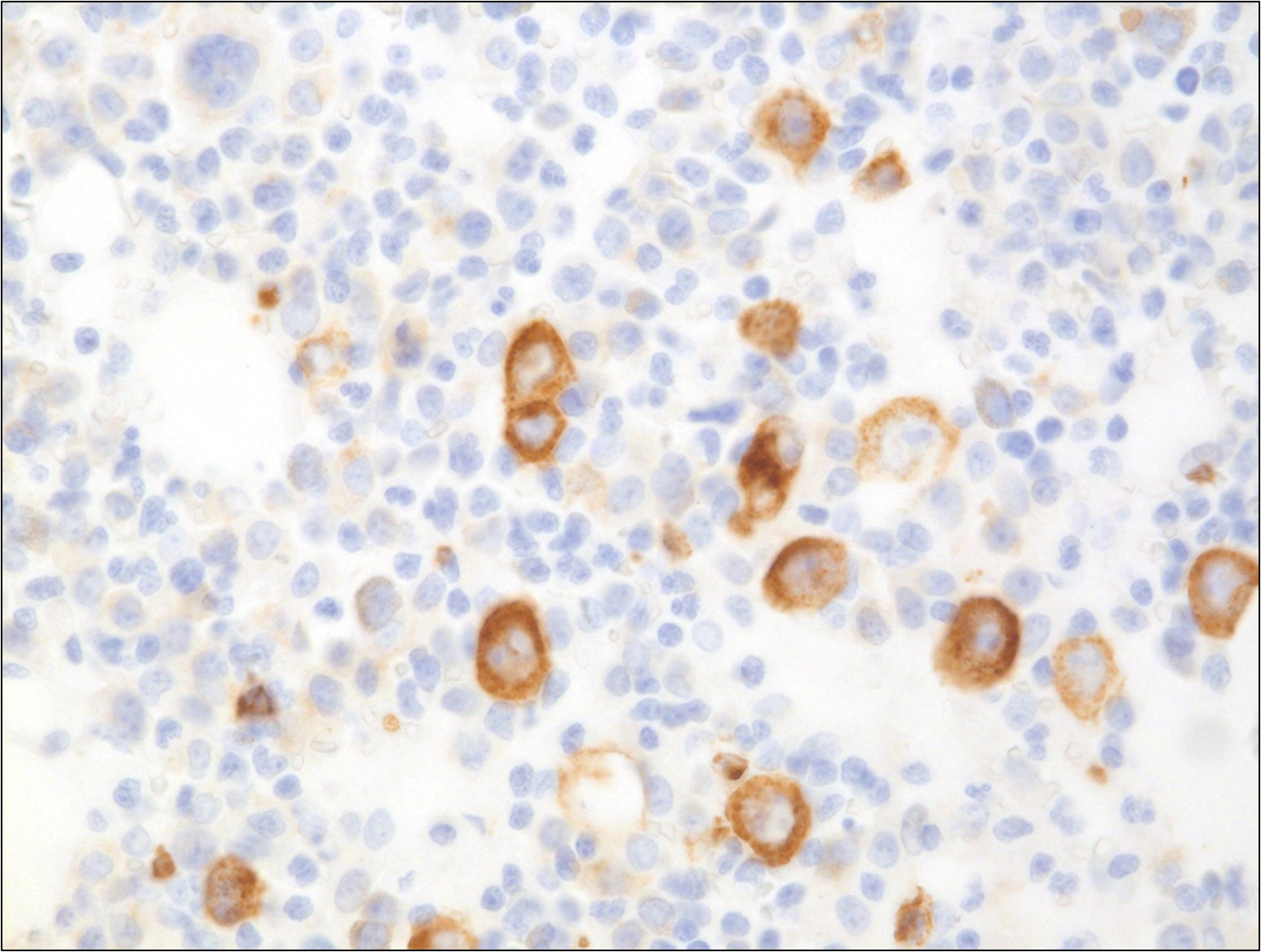 Bone marrow trephine biopsy showing variable…
Morphology
Cytology:
- Bone marrow aspirates may show enlarged pronormoblasts7giant proerythroblasts or lantern cells, with prominent glassy nucleoli-like intranuclear inclusions, chromatin margination, and occasional cytoplasmic vacuolization or cytoplasmic projections
- Erythroid maturation may be reduced or arrested
- B19 immunostaining is diagnostically helpful
- Enlarged pronormoblasts/proerythroblasts with viral changes may be seen transiently in the bone marrow and peripheral blood smears of immunocompromised patients. (1)
Histology:
- Bone marrow trephine biopsies typically show erythroid hypoplasia or maturation arrest with scattered enlarged, infected erythroid precursor cells. These cells show large eosinophilic-to-glassy intranuclear inclusions, chromatin margination, and variable nuclear membrane dissolution
- CD71 highlights erythroid precursor cells and may help to identify infected giant pronormoblasts
- Specific B19 immunohistochemistry confirms the viral infection.
Clinical notes
Parvovirus B19 is a small, non-enveloped, single-stranded DNA virus with tropism for erythroid precursor cells.
Clinical manifestations of Parvovirus B19 infection vary according to patient age, underlying hematologic status, and immune competence. Parvovirus B19 preferentially infects and replicates within erythroid precursor cells in the bone marrow.
In children, acute infection typically presents as erythema infectiosum (fifth disease), characterized by fever and a distinctive "slapped-cheek" rash.
In adults, arthralgias and arthritis predominate, often affecting multiple joints symmetrically.
In patients with increased erythrocyte turnover (e.g., hemolytic anemias), Parvovirus B19 infection can precipitate a transient aplastic crisis due to temporary cessation of erythropoiesis. In immunocompromised individuals, persistent viral replication may occur, manifesting as chronic pure red cell aplasia with severe, prolonged anemia. The clinical course is generally benign and self-limited in immunocompetent hosts, but may result in significant morbidity in the setting of immunosuppression or underlying hematologic disease.
Ancillary Testing
Serologic testing for IgM and IgG antibodies; NAAT/PCR for Parvovirus B19 DNAAdditional Information
In pregnant women, Parvovirus B19 infection may cause fetal hydrops and intrauterine fetal death, particularly when infection occurs during the second trimester (2).
Patients are most infectious prior to the onset of rash or arthralgias, when viremia is highest (3).
References
Stenberg J, Babu D, Deshmukh N. Before the Blood Drops: Early Clues of Parvovirus B19. EJHaem. 2025 Oct 11;6(5):e70165. doi: 10.1002/jha2.70165. PMID: 41080659; PMCID: PMC12515047.
- E. S. Jaffe, N. L. Harris, D. A. Arber, E. Campo. Hematolpathology 2016, 2 ndRevised Ed. p 205 ff
- Obstetrics & Gynecology 125(6):p 1510-1525, June 2015
- Young NS, Brown KE. Parvovirus B19. N Engl J Med. 2004 Feb 5;350(6):586-597